Universitas Negeri Semarang (UNNES) has launched an international research project that will explore the use of artificial intelligence (AI) to improve mathematics learning for primary school students, reflecting the growing role of AI in education.
The project, funded by KONEKSI, the Australia–Indonesia Knowledge Partnership Platform, integrates AI, coding and STEM education to develop more inclusive learning models that strengthen children's numeracy skills.
AI at the Core of the Learning Model
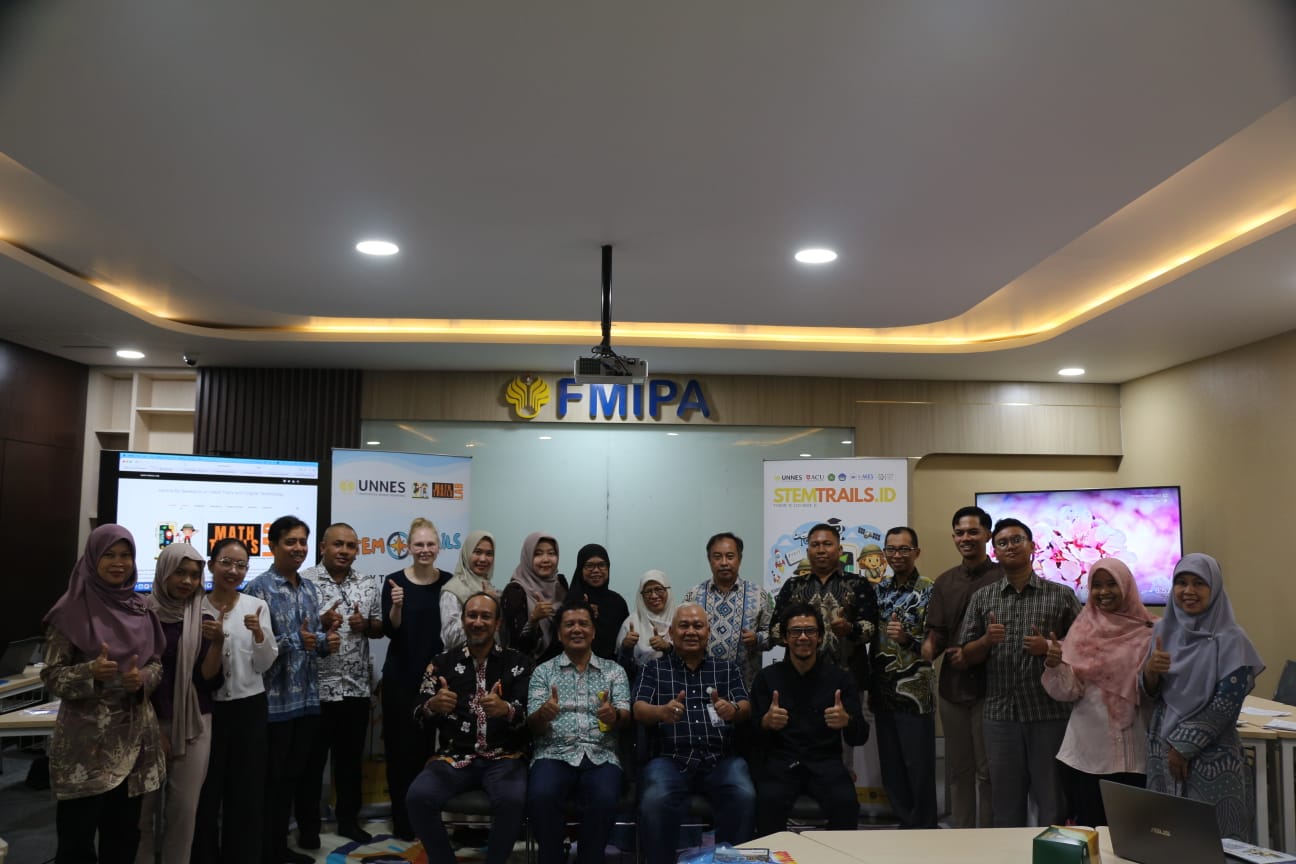
The initiative, titled "Code, Count, Connect: Enhancing Inclusive Numeracy through AI and Coding-integrated STEM Trails in Indonesia," began with a STEM Trails workshop at the Faculty of Mathematics and Natural Sciences (FMIPA) at UNNES.
The research will examine how AI-supported learning activities can help students better understand mathematics by connecting classroom concepts with real-world situations while encouraging problem-solving and digital literacy.
Project leader Dr. rer. nat. Adi Nur Cahyono said the program will be implemented in Semarang, Samarinda and Ambon, involving 100 primary school students in each region.
“The research implementation will be conducted in three regions: Semarang, Samarinda, and Ambon. In each region, we will involve 100 primary school students in the research process. Through an inclusive approach, we integrate AI and coding to make mathematics more meaningful and connected to students’ surrounding environment.”
The project is being carried out in partnership with Universitas Mulawarman, Universitas Pattimura, the Komunitas Penggerak Numerasi Indonesia (KPNI) and the Indonesian Mathematics Educators Society (I-MES).
Building Evidence for AI in Indonesian Classrooms
Researchers hope the project will provide evidence on how AI can support more personalized and engaging mathematics instruction while reducing learning gaps among students from different regions.
The study also involves representatives from the Ministry of Primary and Secondary Education, the Ministry of Higher Education, Science and Technology, SEAMEO QITEP in Mathematics, and regional education offices to help ensure the findings align with national education priorities.
Beyond improving numeracy skills, the research is expected to contribute to future education policies by identifying practical ways to integrate artificial intelligence into primary school teaching and learning across Indonesia.



Tidak ada komentar: